Commercial Laundry Sustainability Claims: What Chemical Suppliers Can Say Carefully
Industrial laundry customers are under pressure to reduce wash temperature, manage utility costs, limit rewash, and document responsible operations. For chemical suppliers, that creates a commercial opportunity—but also a claims risk.
Enzyme-enabled detergents and additives can support credible sustainability messaging when the claim is tied to a defined wash condition, substrate mix, soil type, and validation plan. The strongest language is not the broadest language. It is the language a product manager, technical service team, and sales team can defend in front of a laundry operator.
For formulators searching for an enzyme supplier for industrial laundry chemicals, the right partner should help connect enzyme class selection to claim discipline, not just ingredient availability.
Why sustainability claims need formulation boundaries
A commercial laundry sustainability claim often fails when it jumps from ingredient feature to operational outcome without the middle layer: the actual wash program.
A protease, amylase, lipase, cellulase, or mannanase may contribute to lower-temperature cleaning, stain release, brightness maintenance, or reduced rewash drivers. But the claim depends on:
- Fabric type and blend, including cotton, polycotton, polyester, and specialty textiles
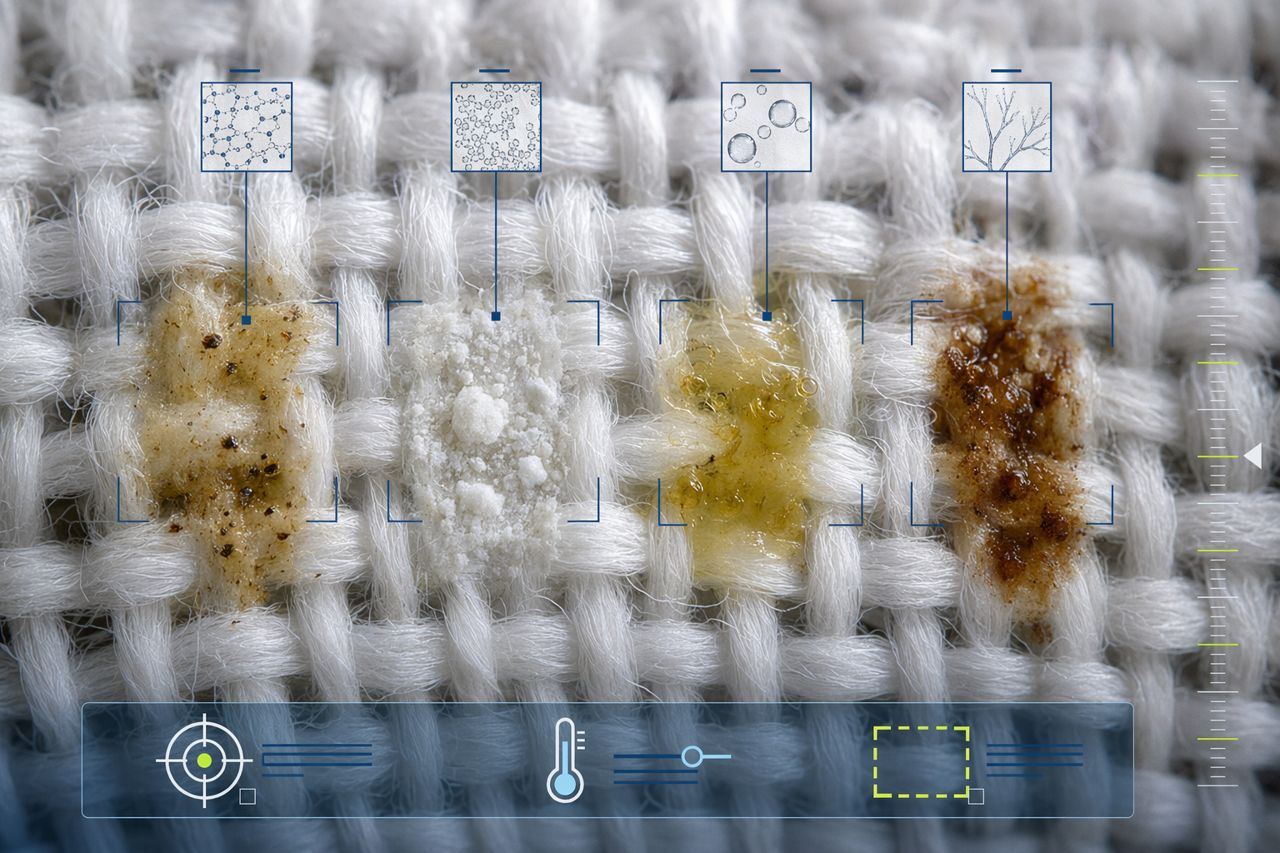
- Soil profile, such as protein, starch, fat, body soil, cosmetic residue, or food soil
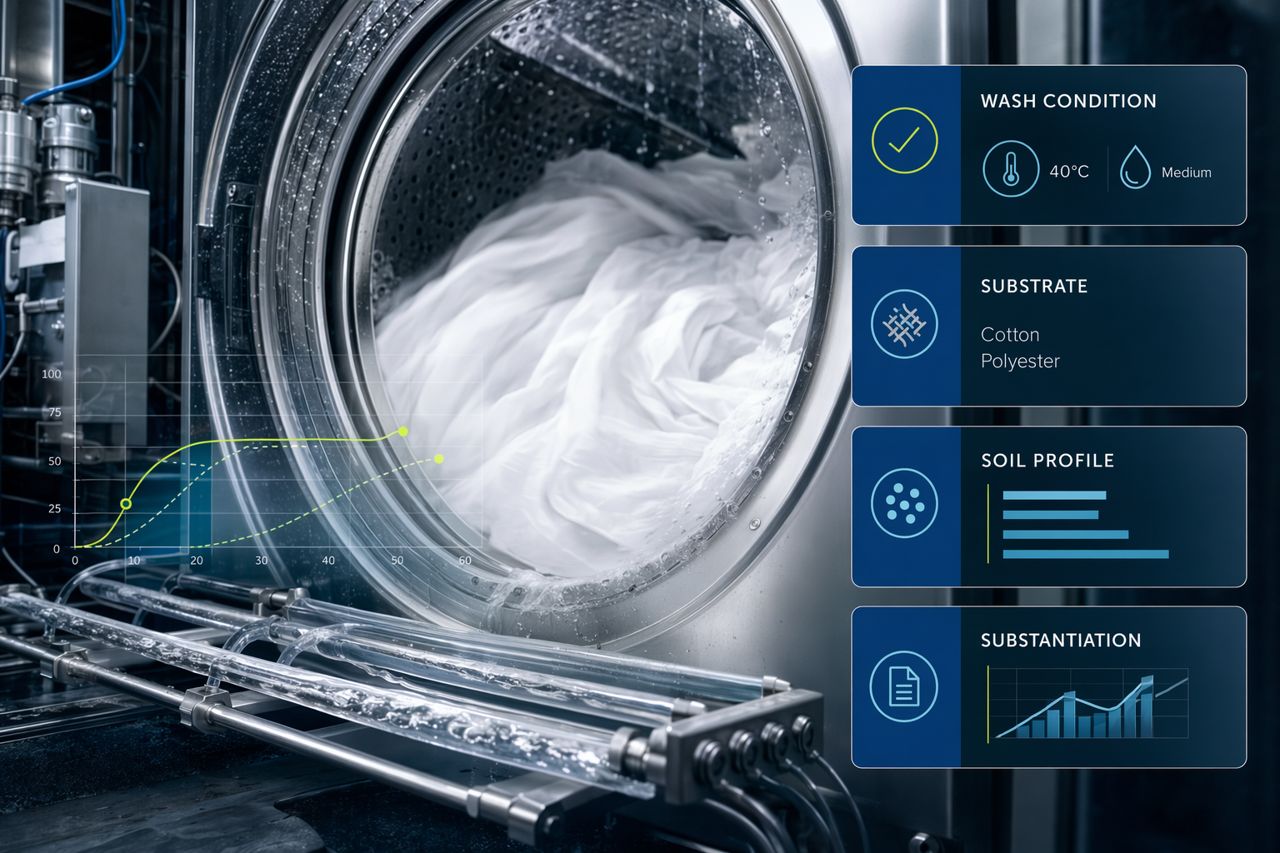
- Wash temperature and cycle time
- Detergent pH and alkalinity system
- Surfactant, builder, chelant, bleach, and preservative package
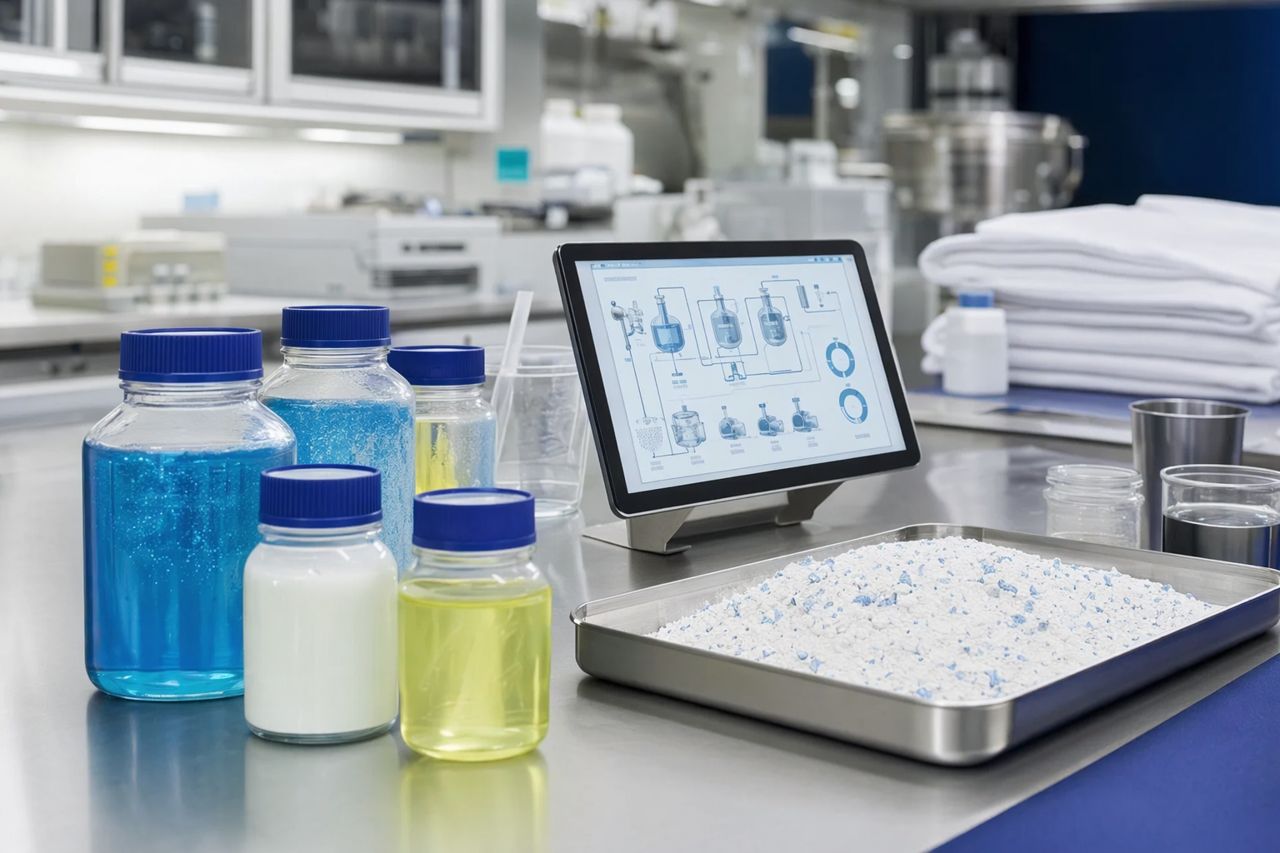
- Liquid or powder format
- Storage time, shipping conditions, and dosing route
- Machine type and water quality
The practical question is not, “Is this enzyme sustainable?” The better question is, “Which formulation outcome can this enzyme support under the conditions our customer actually runs?”
A useful claim ladder for laundry chemical suppliers
Use a claim ladder to keep marketing, regulatory, technical, and sales teams aligned.
| Claim level | What it means | Example of careful wording |
|---|---|---|
| Ingredient fact | Describes what the enzyme class is selected to do | “Contains a protease selected for protein soil removal in alkaline laundry formulations.” |
| Formulation performance | Connects the enzyme to a validated detergent outcome | “Designed to support protein stain removal at reduced wash temperatures when used in the validated wash program.” |
| Operational implication | Links performance to a potential laundry benefit | “May help reduce rewash caused by selected protein soils when validated on-site.” |
| Sustainability-related statement | Connects the operational benefit to resource use, with qualification | “Supports lower-temperature wash program development where cleaning performance is confirmed by site testing.” |
This structure helps avoid unsupported leaps such as “eco-friendly,” “green,” or “energy-saving” without context. It also gives sales teams language that can survive technical questioning.
Where enzymes can support careful sustainability language
1. Lower-temperature cleaning programs
Enzymes are often used to maintain stain removal when laundries move away from hotter wash steps. A careful claim should specify the target soils and confirm that cleaning performance was evaluated under the proposed wash program.
Careful wording:
- “Formulated to support effective stain removal at reduced wash temperatures.”
- “Developed for lower-temperature programs where enzyme-compatible conditions are maintained.”
- “Supports low-temperature wash development for selected protein, starch, fat, or gum soils.”
Avoid wording that promises energy reduction unless the laundry operation has measured it in its own process.
2. Rewash reduction drivers
Rewash is expensive. It consumes labor, water, chemistry, machine time, and textile life. Enzymes can help address certain stain categories before they become rewash triggers.
Careful wording:
- “Targets stain categories associated with rewash in hospitality and food-service textiles.”
- “May reduce rewash drivers when matched to the site soil profile and validated in production.”
- “Supports first-pass cleaning performance for selected organic soils.”
This is commercially useful because it connects the enzyme to a pain point while preserving the need for validation.
3. Fabric brightness and appearance maintenance
Cellulase and selected enzyme systems may support appearance maintenance on cotton-rich textiles by helping manage fuzz and dullness. The claim should avoid suggesting textile restoration or indefinite life extension.
Careful wording:
- “Designed to support brightness maintenance in compatible cotton-containing textiles.”
- “Helps manage appearance loss linked to surface fiber effects under validated conditions.”
- “Supports textile care positioning for compatible wash programs.”
4. Concentrated liquid and powder detergent differentiation
Sustainability claims are often strongest when connected to product architecture: concentrated liquids, efficient dosing, multi-enzyme systems, or low-temperature additives. Enzyme selection must then account for formulation stability and use conditions.
Careful wording:
- “Supports concentrated detergent development by enabling targeted stain performance in a compact formulation.”
- “Selected for compatibility with the intended surfactant, builder, and storage system.”
- “Designed for industrial laundry detergents and additives where enzyme stability and wash performance are both required.”
What to avoid in sustainability copy
Avoid claims that are absolute, vague, or disconnected from test conditions.
| Avoid | Use instead |
|---|---|
| “Eco-friendly enzyme detergent” | “Enzyme-enabled detergent designed to support lower-temperature wash programs after validation.” |
| “Cuts energy use” | “Supports cleaning performance at reduced wash temperatures; site energy impact should be measured by the laundry operator.” |
| “Eliminates rewash” | “May help reduce rewash drivers for selected stain types when matched to the soil profile.” |
| “Biodegradable cleaning system” | “Contains enzyme technology selected for targeted organic soil breakdown; full product claims require finished-formula assessment.” |
| “Works on all stains” | “Targets defined stain classes such as protein, starch, fat, cellulose-related surface effects, or gum residues.” |
Building the substantiation package
A product manager does not need a vague sustainability story. They need a launch-ready claim package. For enzyme-based industrial laundry chemistry, that package should include:
- Target customer segment: hospitality, healthcare, food service, workwear, linen rental, or institutional laundry
- Target substrate list and exclusions
- Soil classes addressed by the enzyme system
- Wash program assumptions: temperature range, pH environment, cycle structure, and dosing point
- Finished formulation format: liquid, powder, booster, prespotter, or additive
- Compatibility notes for surfactants, builders, chelants, bleach systems, preservatives, and dyes
- Storage and handling expectations for commercial distribution
- Performance comparison against the supplier’s internal control formula
- Recommended claim language for technical data sheets, sell sheets, and customer presentations
- Site validation guidance for laundry operators
This documentation helps commercial teams sell the product responsibly and helps technical service teams troubleshoot when site conditions differ from the original brief.
Selecting enzyme classes by formulation outcome
Protease
Best aligned with proteinaceous soils such as blood, food protein, body soil, and certain healthcare or hospitality stains. Sustainability-related language is usually connected to lower-temperature cleaning or rewash reduction drivers.
Amylase
Useful for starch-based soils from food service, kitchen linen, napery, and hospitality applications. Claims should reference starch soil removal rather than general stain removal.
Lipase
Selected for fat and oil soils, including food grease and body-derived oily residues. Finished-formula performance is strongly influenced by surfactant system and wash temperature.
Cellulase
Used for cotton-containing textiles where brightness, surface appearance, and fiber-related dullness are relevant. Claims should be limited to compatible textiles and validated wash conditions.
Mannanase
Targets mannan gums and thickener residues often associated with food, personal care, and certain processed stains. It can be useful for differentiated stain-removal claims in hospitality and food-service laundry products.
A better commercial brief for sustainability-positioned laundry products
Before selecting the enzyme system, define the claim you want to defend. A strong brief should answer:
- Which laundry segment is the product built for?
- Which stain classes matter commercially?
- Which wash temperature or cycle change is the customer trying to support?
- Is the product a main detergent, additive, booster, prespotter, or specialty blend?
- What formulation constraints matter most: pH, oxidants, preservatives, surfactant load, water content, powder processing, or storage profile?
- What claim language will appear on the sell sheet?
- What evidence will technical service collect before the claim is used in customer proposals?
When this brief is clear, enzyme selection becomes more commercially useful and less speculative.
How Enzymimpact supports careful claim development
Enzymimpact works with industrial laundry chemical suppliers that need enzyme systems aligned to finished-product outcomes. We help formulation teams evaluate enzyme class fit, compatibility considerations, application positioning, and scale-up requirements for detergents, boosters, additives, and specialty laundry products.
Our role is not to write exaggerated sustainability promises. It is to help you build differentiated laundry chemistry with claims that are specific, testable, and useful in B2B sales conversations.
Request a quote
Developing an enzyme-enabled detergent, booster, or laundry additive with sustainability-related positioning? Share your target substrate, soil profile, wash conditions, and desired claim language.
Request a quote and Enzymimpact will help map the right enzyme approach to your industrial laundry formulation brief.